
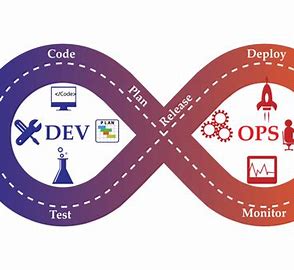
DevOps is a popular and influential approach to software development and delivery that aims to unify development and operations teams, automate processes, and deliver high-quality products faster and more reliably. In this blog, I will introduce the concept of DevOps, explain its benefits and challenges, and provide some tips and resources to help you get started with DevOps.
What is DevOps?
DevOps is a combination of two words: development and operations. It refers to a set of practices, tools, and a cultural philosophy that enable collaboration, communication, and integration between software development and IT operations teams. DevOps breaks down the traditional silos and barriers that often exist between these teams, and fosters a culture of shared responsibility, feedback, and continuous improvement.
DevOps is not a specific technology, tool, or framework. Rather, it is a mindset and a way of working that can be applied to any software development and delivery process. DevOps is also not a one-size-fits-all solution. Different organizations may adopt different aspects of DevOps according to their needs, goals, and capabilities.
The main objective of DevOps is to deliver value to customers faster and more efficiently, while maintaining quality, security, and reliability. DevOps achieves this by applying some key principles and practices, such as:
– Continuous integration (CI): The practice of merging code changes from multiple developers into a shared repository frequently, and running automated tests and code quality checks to ensure the code is ready for deployment.
– Continuous delivery (CD): The practice of automating the deployment of code changes to various environments, such as testing, staging, and production, and ensuring the code is always in a deployable state.
– Continuous feedback: The practice of collecting and analyzing feedback from various sources, such as customers, users, stakeholders, and metrics, and using it to improve the product and the process.
– Infrastructure as code (IaC): The practice of managing and provisioning infrastructure, such as servers, networks, and databases, using code and configuration files, rather than manual processes and GUI tools.
– Monitoring and logging: The practice of collecting and analyzing data from various sources, such as applications, systems, and networks, to monitor performance, availability, and errors, and to troubleshoot and resolve issues.
– Collaboration and communication: The practice of fostering a culture of trust, transparency, and teamwork among development and operations teams, and using tools and methods, such as chat, video conferencing, and agile methodologies, to facilitate communication and coordination.
What are the benefits of DevOps?
DevOps can bring many benefits to organizations, teams, and customers, such as:
– Faster time to market: DevOps enables faster and more frequent delivery of features, updates, and fixes, which can help organizations gain a competitive edge and meet customer expectations.
– Higher quality: DevOps improves quality by ensuring code is tested and verified at every stage of the development and delivery process, and by enabling faster detection and resolution of defects and errors.
– Lower costs: DevOps reduces costs by optimizing resource utilization, eliminating waste and rework, and increasing efficiency and productivity.
– Higher customer satisfaction: DevOps enhances customer satisfaction by delivering value faster, more reliably, and more consistently, and by incorporating customer feedback into the product and the process.
– Higher employee satisfaction: DevOps improves employee satisfaction by reducing stress and frustration, increasing autonomy and empowerment, and fostering a culture of learning and innovation.
What are the challenges of DevOps?
DevOps is not without its challenges, such as:
– Cultural change: DevOps requires a significant shift in mindset and behavior from both development and operations teams, who may have different goals, incentives, and ways of working. DevOps also requires strong leadership and support from management, who may need to overcome organizational inertia and resistance to change.
– Skill gap: DevOps demands a high level of technical and soft skills from both development and operations teams, who may need to learn new tools, technologies, and practices, and to collaborate and communicate effectively across disciplines and functions.
– Complexity and risk: DevOps introduces new levels of complexity and risk to the software development and delivery process, such as managing multiple environments, dependencies, and configurations, and ensuring security and compliance across the entire lifecycle.
How to get started with DevOps?
DevOps is not a destination, but a journey. There is no single or definitive way to implement DevOps, and different organizations may have different starting points and paths. However, some general steps and tips to help you get started with DevOps are:
– Assess your current state: Analyze your current software development and delivery process, identify the pain points, gaps, and opportunities for improvement, and define your goals and objectives for DevOps.
– Choose your tools and technologies: Select the tools and technologies that best suit your needs, goals, and capabilities, and that can support and enable the DevOps practices and principles. Some examples of popular DevOps tools and technologies are Git, Ansible, Docker, Puppet, Jenkins, Azure DevOps, Chef, Nagios, and Kubernetes.
– Implement and iterate: Start small and simple, and implement DevOps incrementally and iteratively, focusing on one area or aspect at a time, and measuring and evaluating the results. Learn from your successes and failures, and adjust and improve your approach as you go.
– Collaborate and communicate: Involve and engage all the relevant stakeholders, such as developers, operations, quality engineers, security, and business, and establish clear roles, responsibilities, and expectations. Use effective communication and collaboration tools and methods, such as chat, video conferencing, and agile methodologies, to facilitate information sharing and coordination.
– Seek guidance and support: Seek guidance and support from experts, mentors, peers, and communities, who can provide valuable insights, advice, and feedback. You can also use online resources, such as blogs, tutorials, courses, and books, to learn more about DevOps and its best practices.
Conclusion
DevOps is a powerful and beneficial approach to software development and delivery that can help organizations, teams, and customers achieve better outcomes faster and more efficiently. DevOps is not a one-time project, but a continuous and evolving process that requires commitment, collaboration, and learning. By following the DevOps principles and practices, and using the appropriate tools and technologies, you can embark on your DevOps journey and reap the rewards.